

Year-End Review: Fibre Testing Trends and Insights from 2025
- Thomas Hegerty
- Jan 16
- 3 min read

Key takeaways
EU Digital Product Passport planning for textiles highlighted the need for machine-readable product data and verifiable test evidence. European Parliament
AATCC issued a 2025 update to its Manual, and ISO released new methods covering antifungal activity and nonwovens mechanical penetration. Labs should refresh SOPs and control plans. ISO+3aatcc.org+3aatcc.org+3
Certification and chemical management tightened. OEKO-TEX announced 2025 regulation changes. ZDHC’s MRSL Conformance Guidance current version is v2.1. Roadmap to Zero Knowledge Base+3OEKO-TEX®+3OEKO-TEX®+3
Recycled staple QC matured with new AFIS guidance on mechanically recycled cotton, including length distribution and nep risks. Uster Technologies
For OFDA users, clearly citing IWTO-47 and IWTO-62 with distribution-level outputs aligns results with buyer and regulatory documentation needs in 2026. OFDA
Content list
2025 highlights at a glance
EU policy and data readiness
Standards and method updates
Chemical management and certification
Recycled fibres and process control
What to prioritise in early 2026
Glossary
FAQ
2025 highlights at a glance
Digital Product Passport work for textiles advanced within the EU policy framework, calling for high-resolution data to support traceability, circularity and compliance. European Parliament
Method owners published notable updates. AATCC listed 2025 changes across multiple test methods. ISO released ISO 13629-1:2025 for antifungal activity using ATP luminescence and ISO 9073-5:2025 for nonwovens resistance to mechanical penetration. ISO+3aatcc.org+3aatcc.org+3
Certification and MRSL conformance requirements became more prescriptive across OEKO-TEX and ZDHC documentation. OEKO-TEX®+2OEKO-TEX®+2
EU policy and data readiness
The European Parliamentary Research Service’s study outlines how a Digital Product Passport can improve textile traceability and circularity. Teams preparing for pilots should map which lab outputs are most valuable in product records, for example diameter and true length distributions for tops and slivers, and ensure method names are explicit in reports for interoperability. European Parliament
Standards and method updates
AATCC Manual 2025. AATCC published a change log for the 2025 Manual and a public overview of new and revised methods. Review before updating specifications. aatcc.org+1
ISO 13629-1:2025. Quantitative determination of antifungal activity using ATP luminescence. Applicable to fibres, yarns, fabrics and finished goods. ISO+2ISO+2
ISO 9073-5:2025. Nonwovens test for resistance to mechanical penetration by a ball, designed for elastic nonwovens where burst tests do not apply. ISO+1
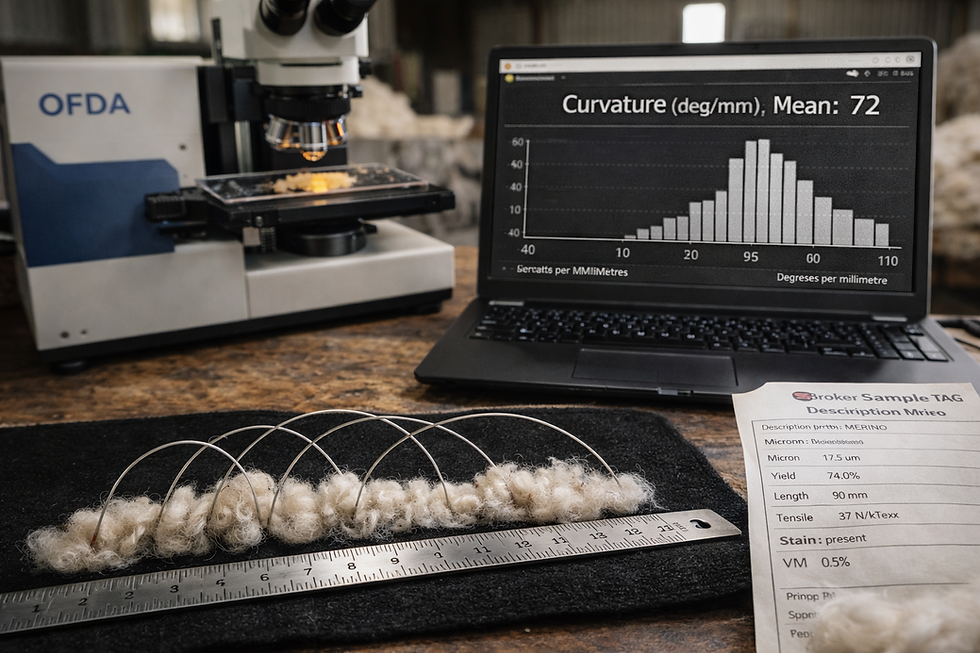
Implication for OFDA reporting When reporting wool, cite IWTO-47 for mean and distribution of fibre diameter. For tops and slivers, cite IWTO-62 for diameter and true length distributions using OFDA4000. Clear method citation supports buyer and regulatory documentation. OFDA+1
Chemical management and certification
OEKO-TEX regulations 2025. New rules effective 1 April 2025 clarified organic cotton claims and updated criteria across programmes, with details in the official press release and information page. OEKO-TEX®+1
ZDHC MRSL Conformance Guidance. The guidance moved to version 2.1, clarifying pathways for certifiers and formulators and how conformance is managed in the ZDHC Gateway. Roadmap to Zero+1
Textile Exchange transition. The Materials Matter Standard criteria launch on 12 December 2025, with effectiveness from 31 December 2026. Plan data mapping and claims transitions ahead of audits. Textile Exchange+2Textile Exchange+2
Recycled fibres and process control
Uster’s 2025 application report provides specific guidance for testing mechanically recycled cotton with AFIS, including effects on length distributions and neps. For mills increasing recycled ratios, pairing AFIS outputs with OFDA distribution-level diameter and true length in tops and slivers can stabilise blending and drafting with fewer trials. Uster Technologies
What to prioritise in early 2026
Update SOPs, work instructions and uncertainty budgets to reflect AATCC 2025 and ISO 2025 changes. aatcc.org+2ISO+2
Make reports DPP-ready. Ensure method names, lot IDs and distributions export in structured formats for downstream systems. European Parliament
Tighten certification evidence. Map MRSL documentation to ZDHC v2.1 guidance and refresh OEKO-TEX dossiers before Q2 2026 audits. Roadmap to Zero+2Roadmap to Zero Knowledge Base+2
For recycled staples, add distribution checks at intake and blend prep to reduce off-spec risk. Uster Technologies
FAQ
What standards changed in 2025 that affect fibre testing Review the AATCC 2025 change log and new ISO entries such as ISO 13629-1 and ISO 9073-5 before updating SOPs and specifications. ISO+3aatcc.org+3aatcc.org+3
How should labs prepare test data for EU Digital Product Passports Map existing outputs to expected attributes, make method names explicit in reports and structure results for system integration. Keep evidence for composition, durability and chemical compliance. European Parliament
Which certification frameworks saw meaningful 2025 updates OEKO-TEX announced new regulations effective 1 April 2025. ZDHC moved MRSL Conformance Guidance to v2.1. Textile Exchange confirmed the Materials Matter Standard criteria launch on 12 December 2025 and effectiveness from 31 December 2026. Textile Exchange+4OEKO-TEX®+4Roadmap to Zero+4
Where do OFDA measurements fit in these trends
Use OFDA2000 for rapid diameter distributions and OFDA4000 when you also need true length distributions in tops and slivers. Cite IWTO-47 or IWTO-62 to align with buyer, certification and regulatory documentation. OFDA+2OFDA+2


Comments