

How Flax Material is Revolutionising Sustainable Innovation
- design6507
- Aug 7, 2025
- 3 min read
Imagine a fibre that has been cherished for thousands of years, woven through the history of civilisation, and yet is now shaping the future of sustainable industries. This is the story of flax material, a remarkable natural fibre making waves far beyond traditional linen fabrics.
Let’s walk through the story of flax from its roots in the earth to its role in tomorrow’s industries, and discover how accurate fibre analysis is helping unlock its full potential.
A Fibre with Deep Roots: What Is Flax Material?
Flax material starts its life as a slender stalk growing in temperate fields, nurtured by nature’s rhythms. The flax plant (Linum usitatissimum) has been cultivated for millennia, prized for its long, strong fibres that eventually become the linen fabrics known and loved worldwide.
What makes flax material special isn’t just its age-old heritage, it’s the unique combination of natural qualities it offers:
Completely biodegradable and eco-friendly
Highly absorbent, yet dries quickly
Naturally resistant to bacteria and fungi
Thermoregulating, keeping you cool or warm as needed
Tough, with excellent tensile strength
These traits have ensured flax’s continued relevance from historic textiles to the cutting-edge materials of today.
The Journey of Flax: From Harvest to High-Performance Fibre
To truly appreciate flax material, we need to follow its story through the fields and factories.
It all begins with sustainable farming. Flax thrives with little water and minimal chemicals, making it a green champion among crops. When ready, flax is gently pulled from the ground to preserve the integrity of its fibres.
Next comes retting, a natural microbial process that loosens the fibres from the stalk. The flax is then carefully scutched and hackled to clean and align those fibres preparing them for spinning into yarn and weaving into fabric.
Every step is vital, because any variation affects the strength, consistency, and usability of the final flax material. This is where measurement enters the story.
Why Measuring Flax Material Matters More Than Ever
Think about flax material as a masterpiece painting: the beauty lies not only in the brushstrokes but in the quality of the canvas underneath. In technical industries like textiles, composites, or eco-friendly construction, understanding the fine details of flax fibre is essential.
Factors like:
Fibre diameter and uniformity
Length and fineness
Moisture levels and crimp
…all impact how flax performs in applications ranging from fashion to automotive parts.
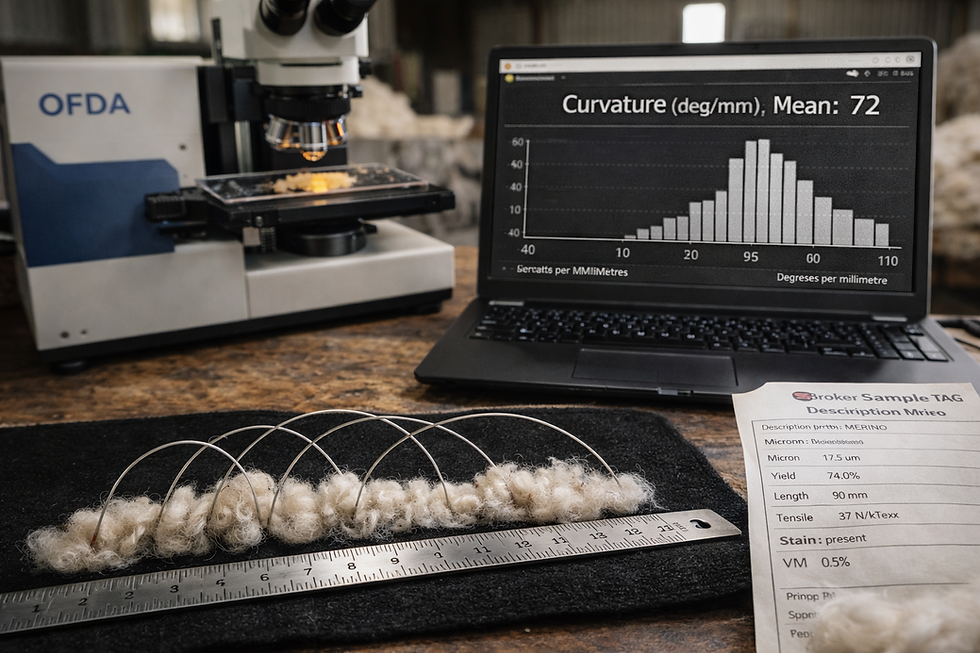
At Robotic Vision, our OFDA analysers offer a window into these microscopic details, using advanced optical technology to deliver fast, accurate and repeatable measurements. This ensures flax fibres meet the highest standards, batch after batch.
Flax Material’s Rising Role in Modern Innovation
While flax is famous for traditional linen, its story today extends into exciting new territories.
Imagine lightweight, eco-friendly car panels made from flax composites. Or imagine sustainable buildings insulated with flax-based materials that breathe naturally, reducing energy use. Even paper and packaging industries are embracing flax fibres for their strength and biodegradability.
Each of these applications depends on flax material’s consistent quality, measured and monitored using tools bridging ancient fibre wisdom with futuristic technology.
Ready to Unleash the Power of Flax? Let’s Make it Measurable.
Whether you’re working in textiles, construction, automotive, or research, Robotic Vision’s OFDA systems can help you harness the full potential of flax material with speed, accuracy, and sustainability at the core.
Contact us today to see how precise measurement can transform your flax material applications.


Comments